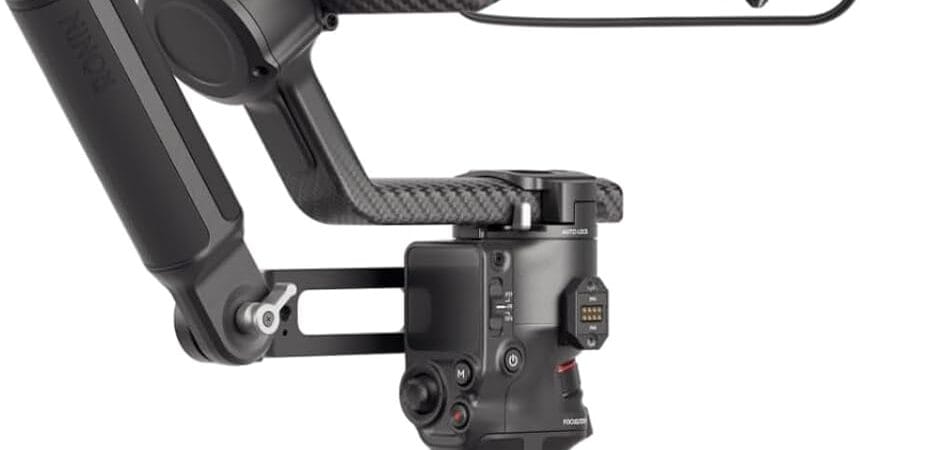
If you make video for a living, or want to, shaky handheld footage is the fastest way to look amateur. The DJI RS 4 Pro Combo is a professional 3-axis gimbal stabilizer built to carry heavier mirrorless and cinema camera rigs without drifting, while still being light enough to hand-hold for a full shoot day. We looked at the real spec sheet, the actual Amazon review history, and what verified buyers say after months of use before writing this up.
Affiliate disclosure: this article contains an Amazon affiliate link. We may earn a commission on qualifying purchases, at no extra cost to you.
Top Pick
DJI RS 4 Pro Combo
4.3 stars from 535 verified ratings, 4.5kg payload, native vertical shooting, LiDAR autofocus. $1,099 at the time of writing.
Check Price on Amazon →Affiliate link. We may earn from qualifying purchases.
Why People Are Switching to This Gimbal
Most entry-level stabilizers top out around 3kg of payload, which rules out anything heavier than a small mirrorless body with a kit lens. The RS 4 Pro Combo is rated for 4.5kg (10lbs), a 20% increase in motor torque over the previous generation, which means it can carry a fully rigged camera: external monitor, microphone, V-mount battery plate, and a longer zoom lens, without the motors straining or the footage showing micro-judder.
The feature that gets mentioned most in verified reviews is second-generation native vertical shooting. Instead of rebalancing the whole rig from scratch to switch from landscape to portrait orientation (the usual process on cheaper gimbals), you release the horizontal plate and lock it into a vertical position directly. For anyone who delivers both a horizontal YouTube cut and a vertical Reels/TikTok cut from the same shoot, that alone can save 10-15 minutes per setup change.
The Combo package specifically adds the Ronin Image Transmitter and the Focus Pro Motor over the base RS 4 Pro. The transmitter lets you monitor and control the shot remotely, which matters most for solo creators who are both in front of and behind the camera. The Focus Pro Motor adds LiDAR-assisted autofocus with 76,800 ranging points within 20 meters, so focus pulls stay accurate even as a subject moves toward or away from the lens.
Battery life is rated at 29 hours when paired with the optional high-capacity grip, and the grip itself can power the camera and accessories with up to 18W, which cuts down on how many separate batteries you have to track on a long shoot day.
The Honest Caveats
- It’s bulky. Several verified reviewers specifically flag the size as awkward in tight indoor spaces or crowded events. This is a professional tool built for payload capacity, not a pocketable vlogging gimbal.
- There’s a real learning curve. Balancing a camera rig on any 3-axis gimbal takes practice, and the RS 4 Pro’s advanced features (dual focus/zoom motor control, LiDAR focus, the image transmitter) add more to learn than a basic stabilizer.
- A small number of buyers reported a mechanical tilt-axis issue on units received new. DJI’s standard return window covers this, and the complaint rate in the review history is a minority, but it’s worth testing the gimbal thoroughly in the first days after it arrives.
- Price. At $1,099, this is a serious investment aimed at creators who shoot often enough, or professionally enough, that the time saved and shot quality gained pay for it.
Who It’s Actually For
This is the right gimbal if you’re already shooting with a mirrorless or cinema camera body and lenses that add up to real weight, and you deliver finished video for clients, a channel, or a brand on a regular schedule. If you’re shooting primarily on a phone, or you only need occasional casual stabilization, a smaller and cheaper gimbal (or even DJI’s own lighter RS 4 Mini) will cover you for far less money. This is built for people whose time behind the camera is worth protecting from reshoots.
What Owners Actually Say
Pulling through the verified-purchase reviews, a few themes repeat often enough to be worth calling out directly rather than just citing the star rating. Working cinematographers who shoot live events (bands, weddings, multi-camera shoots) describe the stabilization as smooth enough to use for walking shots through a crowd without the footage looking handheld. One detailed review from someone shooting a fully rigged Sony A7IV with a 24-70mm lens, a matte box, a monitor, and a shotgun mic reported the gimbal handled the combined weight “well,” though they noted the included handle isn’t as rigid as some third-party accessory handles once you start adding that much gear.
A second recurring theme is value relative to the RS 4 Pro’s two cheaper siblings in DJI’s own lineup (the standard RS 4 and the RS 4 Mini). Reviewers who tried the base RS 4 first and later upgraded to the Pro Combo consistently point to the Focus Pro Motor and the extra payload headroom as the reason they didn’t regret paying more, specifically for anyone doing paid or semi-professional work where a missed focus pull costs a reshoot.
The one specific complaint that shows up more than once is about the tilt-axis motor on a minority of units arriving with a mechanical fault, serious enough that a few buyers needed a replacement. It isn’t the dominant sentiment in 535 ratings (76% are five-star), but it’s consistent enough that we’re flagging it directly rather than burying it: test the gimbal’s full range of motion in every axis as soon as it arrives, while you’re still inside the return window.
How It Compares
Against DJI’s own RS 4 (no “Pro,” sold separately for roughly $469), the Pro Combo’s real advantages are the included Focus Pro Motor, the higher 4.5kg payload versus the standard model’s lower rated capacity, and the Ronin Image Transmitter for remote monitoring. If you’re shooting lighter mirrorless setups without a heavy zoom lens and don’t need remote monitoring, the standard RS 4 is a legitimate way to save several hundred dollars. The Pro Combo earns its price specifically when your rig gets heavy, or when focus-pulling accuracy on a moving subject is part of your job.
Specs at a Glance
- Payload capacity: 4.5kg (10lbs)
- Includes: Gimbal, BG30 Battery Grip, Ronin Image Transmitter, Focus Pro Motor, Quick-Release Plate, Carrying Case
- Battery runtime: up to 29 hours with optional high-capacity grip
- Vertical shooting: 2nd-gen native, tool-free
- Rating: 4.3 out of 5 from 535 verified ratings
Frequently Asked Questions
- What cameras is the DJI RS 4 Pro Combo compatible with? It’s built for mirrorless and DSLR cinema cameras from major brands (Sony, Canon, Nikon, Panasonic, Fujifilm) up to a 4.5kg combined camera-and-lens weight.
- Does it come with a carrying case? Yes, the Combo package includes a dedicated carrying case along with the gimbal, battery grip, image transmitter, and focus motor.
- Can it be used for outdoor filming? Yes. Reviewers report reliable outdoor use including travel, events, and run-and-gun style shooting, though like any precision electronics it isn’t rated for submersion or heavy rain.
- Is the battery rechargeable? Yes, the included battery grip is rechargeable via USB-C, and the optional high-capacity grip extends runtime to roughly 29 hours.
- Does it have a remote control? The included Ronin Image Transmitter functions as a remote monitor and control unit, letting you adjust framing and settings without touching the gimbal directly.
- Does the gimbal need rebalancing after switching orientations? Yes, DJI’s own documentation notes the gimbal needs a quick rebalance after switching between horizontal and vertical shooting, though the mechanism itself is tool-free and fast.
How We Built This Guide
Our process: this is a research-based pick, not a hands-on lab test. We aggregate verified-owner reviews, professional test data where available, and real discussion patterns from communities like Reddit, then flag every estimate as such in the guide above. We do not accept sponsored placements.
Last checked: October 1, 2026