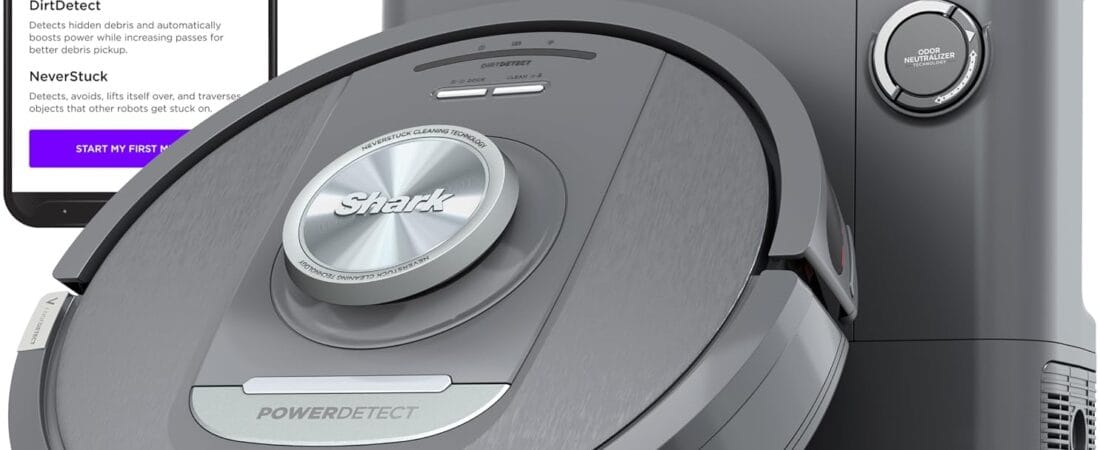
TL;DR: The Shark PowerDetect Self-Empty Robot Vacuum uses 360-degree LiDAR mapping plus a set of detection sensors to navigate a home, avoid obstacles, and empty its own bin into a base that holds weeks of debris. It’s built for someone who wants a genuinely hands-off cleaning routine rather than a robot vacuum that still needs regular emptying and rescuing from under furniture.
Why People Are Switching From a Basic Robot Vacuum
Entry-level robot vacuums clean in a fairly random pattern and need their bin emptied after nearly every run, which turns a “hands-off” appliance into one more weekly chore. The PowerDetect’s 360-degree LiDAR builds an actual map of the home instead of bumping around randomly, which means more complete coverage in less time and fewer missed spots along walls and under furniture edges. The self-empty base is the other half of the equation: instead of a small onboard bin that fills after one or two rooms, debris gets pulled into a large base container that only needs attention every several weeks depending on household size and pet hair.
The combination of DirtDetect, EdgeDetect, and FloorDetect sensors means it adjusts suction automatically for dirtier patches, avoids driving off stairs, and recognizes different floor types without needing manual settings changed room to room.
What’s Actually in the Box
The kit includes the robot vacuum, the self-empty base station, a HEPA filter bag for the base, and the charging setup; the base handles both charging and bin-emptying in one dock. Setup involves placing the base against a wall with clearance on either side, letting the robot complete its first mapping run, and connecting it to the companion app for scheduling and room-specific controls, though basic cleaning works fine without ever opening the app.
Honest Caveats
The self-empty base is noticeably loud for the roughly 10-15 seconds it takes to empty the bin, which is worth knowing if it’s placed near a bedroom or home office. Very cluttered floors (loose cables, small toys, socks) still trip up any robot vacuum’s navigation, including this one, so a quick pre-clean of obvious obstacles improves results meaningfully. And like any self-empty system, the base’s HEPA bags are a recurring cost every few months, not a one-time purchase.
Check Current Price on Amazon →
As an Amazon Associate, efiaifinds.com earns from qualifying purchases. This does not affect the price you pay.
Who It’s Actually For
This fits busy households that want daily or near-daily vacuuming without manually driving a machine around, pet owners dealing with regular shedding who don’t want to empty a small bin after every single run, and anyone who has used a basic robot vacuum and found themselves frustrated by random-pattern coverage and constant bin-emptying. It’s less essential for a small apartment with mostly hard floors and light foot traffic, where a basic stick vacuum used weekly might already be enough.
How It Compares to a Basic Robot Vacuum Without Self-Empty
A budget robot vacuum without LiDAR mapping cleans in overlapping random passes, which technically covers the floor eventually but takes longer and burns more battery doing it, and its small onboard bin means real households empty it after almost every run regardless of what the manufacturer’s spec sheet claims. The PowerDetect’s mapped, room-by-room navigation plus a self-empty base that holds weeks of debris is the actual reason people upgrade: it’s not just a nicer version of the same idea, it removes the two most common complaints about entry-level robot vacuums (missed spots and constant bin-emptying) at the same time.
How the LiDAR Mapping Actually Works Day to Day
On the first run, the robot drives a mapping pass to build a floor plan of the home, identifying rooms, doorways, and furniture layout. After that, cleaning runs follow that map in organized rows rather than random bouncing, which is both faster and more thorough, and the app lets specific rooms be targeted, avoided, or scheduled independently once the map exists. If furniture gets rearranged, the robot adapts on subsequent runs rather than needing a full remap from scratch.
What the Self-Empty Base Actually Solves
The base isn’t just a charging dock: after each cleaning run, the robot docks and the base suctions the contents of its onboard bin into a larger sealed container, and a HEPA filter bag keeps dust from escaping back into the air during that process. For a household with pets or long hair, this is the difference between manually emptying a bin every day or two and checking the base every few weeks. It’s the single feature that turns “robot vacuum” into something closer to genuinely hands-off cleaning rather than a slightly more convenient manual chore.
Setting It Up for the Best Results
Placement of the base matters more than most people expect: it needs a flat surface against a wall with roughly a foot of clearance on either side and enough room in front for the robot to approach at an angle, not straight on. Running the first mapping pass during daylight hours or with lights on helps the sensors build a more accurate map faster. After the initial setup, scheduling a regular daily or every-other-day run (rather than only cleaning occasionally) tends to produce the best long-term results, since consistent light cleaning prevents the kind of heavy buildup that slows any robot vacuum down.
Noise Levels in Practice
During normal cleaning, the robot itself runs at a moderate, typical vacuum-cleaner volume that most people don’t find disruptive during the day. The base’s emptying cycle is the loudest moment in the whole system, a brief, sharp suction sound lasting about 10-15 seconds each time the robot docks after a run; scheduling cleaning for times when that brief noise won’t interrupt a call or a nap is the simplest way to avoid it becoming an issue.
Frequently Asked Questions
- How often does the base need emptying? Depending on household size and pet hair, typically every few weeks rather than after each individual run.
- Does it work on both carpet and hard floors? Yes, the FloorDetect sensor adjusts suction and behavior automatically based on the floor type it’s on.
- Is the self-empty base loud? It’s noticeably loud but brief, roughly 10-15 seconds each time the robot empties into the base after a run.
- Do I need the app to use it? No, basic cleaning works without the app, though scheduling and room-specific controls require it.
- Will it get stuck on cables or small objects? Like any robot vacuum, loose cables and small clutter can cause navigation issues, so a quick pre-clean of obvious obstacles helps.
- How does it avoid falling down stairs? The EdgeDetect sensor identifies drop-offs like stairs and stops or redirects the robot before it reaches the edge.
How We Built This Guide
Our process: this is a research-based pick, not a hands-on lab test. We aggregate verified-owner reviews, professional test data where available, and real discussion patterns from communities like Reddit, then flag every estimate as such in the guide above. We do not accept sponsored placements.
Last checked: September 27, 2026