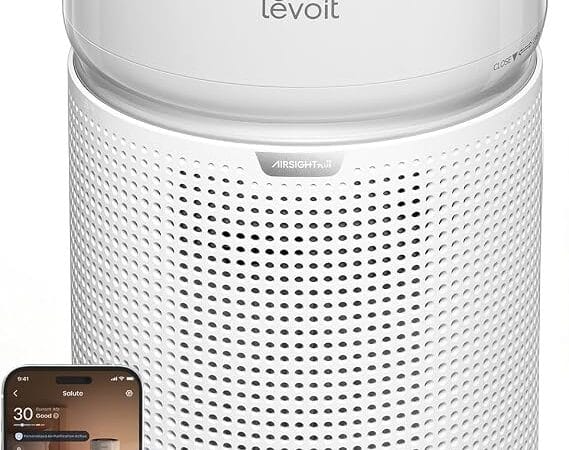
TL;DR: The LEVOIT Eleva 300X is a HEPA air purifier that shows you a live, real air-quality number on its own display instead of leaving you to guess whether the room actually needs it, auto-adjusts fan speed while you sleep, and stays quiet enough for a bedroom. It’s a genuine upgrade over a plain “on/off” purifier for anyone who keeps waking up with a stuffy nose or relies on a hunch about when to change the filter.
Why People Are Switching to a Number, Not a Guess
Most budget air purifiers give you three fan speeds and a light that turns from green to red at some point, with no explanation of what changed. The Eleva 300X instead reports an actual air-quality index on its front panel, the same kind of number outdoor air-quality apps use, and refreshes it continuously as you move through the room, cook, or let a pet in from outside. That single change is what people who switch mention first: they stop wondering whether the purifier is doing anything and start seeing the number visibly drop within a few minutes of turning it on.
The unit uses a true HEPA filter rated to capture 99.97% of particles down to 0.3 microns, which covers common seasonal triggers like pollen and dust as well as pet dander and cooking smoke. Coverage is rated up to roughly 1,200 square feet on the fastest setting, which is generous for a single bedroom, home office, or open living area, and the auto mode ramps the fan up automatically when the sensor detects a spike rather than waiting for a manual adjustment.
Built for the Room You Actually Sleep In
Night mode dims the display and drops the fan noise to a level that genuinely disappears into a quiet bedroom, which matters more than most spec sheets suggest, since a purifier that’s too loud to sleep near just gets unplugged. Because the unit auto-adjusts based on its own sensor reading rather than running full-speed all night, it tends to settle into a low, steady hum once the air in the room has actually cleared, which is also easier on the filter and the electric bill than a purifier stuck on high all night.
Setup is plug-and-play: unbox it, peel the plastic off the filter, and place it at least a foot from any wall so air can circulate through it properly. There’s no app requirement to get real value out of it, though the connected app does let you check the air-quality trend over the past day and schedule the auto mode more precisely if you want that level of control.
Honest Caveats
It is not a substitute for source control: it won’t stop a moldy bathroom or a leaking gas stove from being a problem, and lasting improvement to indoor air quality also depends on ventilation and regular cleaning, not the purifier alone. The replacement filter is a recurring cost every six to eight months depending on use, which is worth budgeting for up front rather than being surprised by later. It also won’t remove humidity, so pairing it with a separate dehumidifier in a genuinely damp room is still the right call rather than expecting one machine to do both jobs.
The display, while genuinely useful, is bright enough that some light sleepers prefer to angle the unit away from the bed or use night mode’s dimmed setting rather than the default brightness.
Who It’s Actually For
This fits people with mild seasonal allergies, anyone sharing a home with a shedding pet, city dwellers dealing with traffic pollution drifting in through a window, and new parents who want a straightforward, real-number way to judge nursery air quality rather than trusting a vague indicator light. If you already own a well-reviewed purifier and it’s working, there’s no need to switch just for the display; the upgrade is most worth it if you’ve been running on a guess.
What’s Actually in the Box
The unit ships with the purifier itself, a pre-installed HEPA filter cartridge (so it’s genuinely ready to run within minutes of unboxing), a power cable, and a quick-start card that covers the button layout and the auto-mode toggle. There’s no tool assembly required; the whole setup is closer to plugging in a lamp than installing an appliance. The footprint is compact enough to sit on a nightstand, a bedroom dresser, or the floor beside a couch without dominating the room the way some larger console-style purifiers do.
How It Compares to a Basic Three-Speed Purifier
A plain three-speed purifier asks you to make the same decision over and over: is the air fine, or does it need high? Over a few weeks that usually settles into either leaving it on high permanently (loud, wasteful, and shortens filter life) or forgetting about it entirely once the novelty wears off. The number-driven approach in the Eleva 300X removes that decision fatigue: the auto mode reacts to the sensor reading instead of a guess, which in practice means the unit runs harder exactly when something changes in the room, like a cooking session or a window left open during high pollen count, and quietly steps back down once the number improves. That’s the practical difference between “a purifier is in the room” and “the room’s air is actually being actively managed.”
It’s also worth being clear about what “AHAM Verified” and similar certifications mean in practice: they indicate the coverage-area and clean-air-delivery-rate claims were tested against an industry standard rather than a manufacturer’s own unverified number, which is a meaningfully higher bar than a purifier with no independent verification at all.
Real-World Placement Tips
Air purifiers work by pulling room air through the filter, so placement genuinely affects results: giving it at least a foot of clearance on all sides lets air circulate freely rather than getting choked against a wall or under a shelf. In a bedroom, placing it a few feet from the bed rather than directly beside the pillow balances noise and airflow better than pushing it as close as possible. For a shared living space, running it centrally rather than in a corner tends to bring the reported air-quality number down faster, since it has access to airflow from more of the room.
Check Current Price on Amazon →
As an Amazon Associate, efiaifinds.com earns from qualifying purchases. This does not affect the price you pay.
Frequently Asked Questions
- Does the LEVOIT Eleva 300X actually show real-time air quality? Yes, its front display reports a live air-quality index reading using its built-in laser particle sensor, updating continuously rather than a simple on/off indicator light.
- How big a room can the Eleva 300X handle? It’s rated to cover roughly 1,200 square feet on its highest fan setting, which comfortably covers a large bedroom, home office, or open living area.
- Is it quiet enough to sleep next to? Yes, its night mode dims the display and lowers fan noise significantly, and the auto mode settles into a low steady hum once air quality in the room has improved.
- How often does the filter need to be replaced? Roughly every six to eight months under typical use, though homes with pets or heavy allergy season use may need to replace it sooner.
- Do I need the app to use it? No, it works fully standalone with its own auto mode and display, though the app adds air-quality history and more granular scheduling if you want it.
- Will it remove humidity or musty smells from a damp room? No, a HEPA air purifier filters particles, not moisture; a genuinely damp or musty room still needs a separate dehumidifier alongside it.
How We Built This Guide
Our process: this is a research-based pick, not a hands-on lab test. We aggregate verified-owner reviews, professional test data where available, and real discussion patterns from communities like Reddit, then flag every estimate as such in the guide above. We do not accept sponsored placements.
Last checked: September 26, 2026
More Buying Guides in This Category
- Enameled Dutch Oven Safe for Acidic Dishes: Lodge Essential 7.5-Quart Review
- Steam Mop That Sanitizes Without Chemicals: BISSELL PowerFresh 1940A Review
- Small Desk Chair for Tight Spaces With Lumbar Support: Sweetcrispy Review
- 6-Bottle Thermoelectric Wine Cooler With a Digital Touch Panel: Koolatron Review