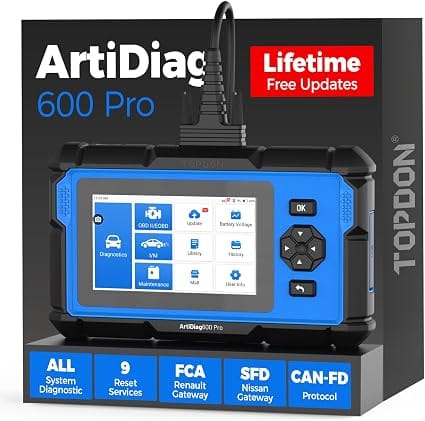
TL;DR: The TOPDON ArtiDiag600 Pro is a handheld OBD2 scanner that reads every system in the car, not just the engine, ABS, airbags, and transmission included, and explains the actual fault in plain language instead of a cryptic code you have to look up. For anyone who’s ever paid a shop just to find out what a warning light means, this pays for itself the first time it’s used.
Why People Are Switching From “Just Google the Code”
A check engine light on its own tells you nothing: it could be a $12 sensor or a $1,200 repair, and the only way to know used to be paying a mechanic for a diagnostic visit or squinting at a forum thread trying to match a five-character code to your exact car. The ArtiDiag600 Pro plugs into the OBD2 port under the steering wheel (standard on virtually every car sold in the US since 1996) and pulls the real fault code along with a plain-language description of what it means, which system it’s in, and often the likely cause.
What separates it from a cheap $20 code reader is system coverage: this one reads the engine, ABS, airbag/SRS, transmission, and several other modules depending on the vehicle, so it catches problems a basic engine-only reader would miss entirely, like an airbag sensor fault that a bargain scanner simply can’t see. It also includes over nine reset functions (oil-life reset, battery registration, and similar service resets), the kind of thing that otherwise means a trip to the dealer after routine maintenance.
What’s Actually in the Box
The kit includes the handheld scanner unit itself, the OBD2 connector cable, a USB cable for firmware updates, and a quick-start guide. There’s no subscription required to read codes; TOPDON includes lifetime free software updates on this model, which matters since manufacturers periodically add new fault codes and vehicle protocols that older scanners can’t decode.
Setup takes under two minutes: plug the cable into the OBD2 port (usually under the dashboard near the steering column), turn the key to the “on” position without starting the engine, and the scanner powers up and walks through a short vehicle-identification step before pulling codes.
Honest Caveats
It reads and clears codes and gives you the real diagnosis, but it doesn’t replace the physical repair itself; clearing a code without fixing the underlying part will usually bring the light right back within a few drive cycles. Screen size is practical rather than flashy, a small backlit LCD rather than a full color touchscreen, which keeps the price reasonable but is worth knowing going in if you were expecting a tablet-style interface. Bidirectional functions (actively testing components rather than just reading data) are more limited on this model than on TOPDON’s higher-end professional units, which is the right tradeoff for a home garage but worth knowing if you’re a working technician who needs the full professional feature set.
Who It’s Actually For
This is built for anyone who owns a car more than a couple of years old and wants to know what a warning light actually means before paying for a diagnostic visit, DIY-inclined drivers who already do their own oil changes and want to clear the service light themselves afterward, and anyone who’s ever paid a shop’s flat diagnostic fee just to be told “it’s the O2 sensor” for something they could have read themselves in two minutes.
Check Current Price on Amazon →
As an Amazon Associate, efiaifinds.com earns from qualifying purchases. This does not affect the price you pay.
How It Compares to a Basic Engine-Only Code Reader
A $20 code reader typically only talks to the engine control module, which means an ABS light, an airbag warning, or a transmission fault simply won’t show up at all, leaving you back where you started. The ArtiDiag600 Pro’s full-system coverage is the actual reason to spend more than the bargain-bin option: it’s the difference between “no codes found” (because the reader literally can’t see that module) and getting the real answer. The reset functions add further value beyond diagnosis alone, covering routine maintenance resets that would otherwise mean a dealer visit purely to clear a service reminder light.
A Realistic First-Use Walkthrough
With the key in the “on” position and the scanner connected, the unit auto-detects the vehicle’s make, model, and year over a short series of prompts, then pulls all stored codes across supported systems in under a minute. Each code comes with a freeze-frame snapshot of conditions when the fault occurred (engine temperature, RPM, and similar data), which is genuinely useful context a mechanic would otherwise charge for pulling. From there, clearing a code after a repair, or after confirming a false alarm, takes a single button press, and the reset menus for oil-life and similar service items are laid out in plain, numbered steps rather than a cryptic settings maze.
Battery and Charging-System Checks, Not Just Codes
Beyond fault codes, the scanner also runs a battery and charging-system test, checking cranking voltage and alternator output, which catches a weak battery before it strands you rather than after. This is the kind of check a shop typically bundles into a paid inspection, and having it built into a handheld tool you already own turns an occasional errand into a five-minute driveway check before a long trip or a cold snap.
Freeze-Frame Data: The Detail Most Cheap Scanners Skip
When a fault triggers, the ArtiDiag600 Pro captures a freeze-frame snapshot: engine RPM, coolant temperature, throttle position, and several other readings at the exact moment the code was set. That context is genuinely useful for telling an intermittent, load-related fault (say, one that only shows up under hard acceleration on a hot day) apart from a constant one, and it’s the kind of diagnostic detail a basic reader simply doesn’t capture at all. Combined with the plain-language fault description, it means a driver with zero mechanical background can walk into a parts store or an independent shop with a much clearer starting point than “the light came on.”
Frequently Asked Questions
- Does the ArtiDiag600 Pro read more than just engine codes? Yes, it covers the engine, ABS, airbag/SRS, transmission, and several additional modules depending on the vehicle, not just the check-engine system a basic reader is limited to.
- Do I need a subscription to keep using it? No, TOPDON includes lifetime free software and coverage updates on this model at no extra cost.
- Will it work on my car? It works on virtually any gasoline vehicle sold in the US since 1996 through the standard OBD2 port, and on many diesel and hybrid vehicles as well; checking the listing’s specific compatibility notes for your exact make and model is still worth a quick look.
- Can it reset the oil-change light and similar service reminders? Yes, it includes over nine reset functions covering oil-life, and other routine service resets that would otherwise require a dealer visit.
- Does clearing a code fix the underlying problem? No, the scanner diagnoses and can clear the stored code, but the physical repair itself still needs to happen, or the light will typically return within a few drive cycles.
- Is it hard to set up for a first-time user? No, it plugs directly into the OBD2 port and walks through vehicle identification automatically, with codes pulled within about a minute of connecting.
How We Built This Guide
Our process: this is a research-based pick, not a hands-on lab test. We aggregate verified-owner reviews, professional test data where available, and real discussion patterns from communities like Reddit, then flag every estimate as such in the guide above. We do not accept sponsored placements.
Last checked: September 26, 2026