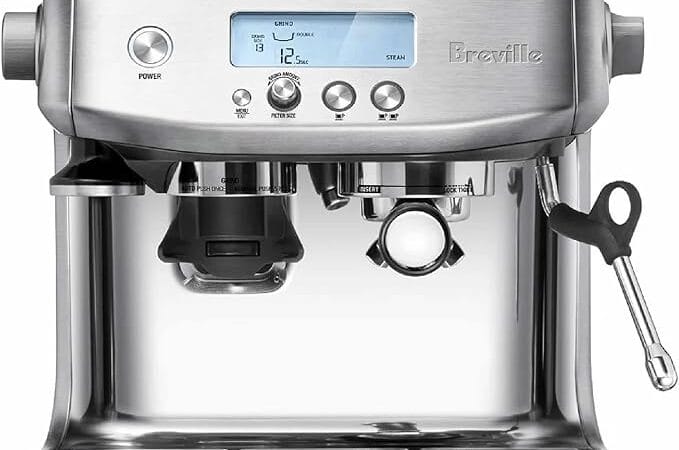
TL;DR: The Breville Barista Pro pairs a built-in conical burr grinder with a fast 3-second heat-up system, so a shot goes from whole bean to extracted espresso without a separate grinder, a warm-up wait, or a trip to a coffee shop. A digital temperature control and an auto steam wand make consistent results realistic even for someone who has never pulled a shot before.
Why People Are Switching From Pods or a Coffee Shop
Pod machines are fast but cap out at whatever the pod contains, and a daily coffee-shop habit adds up to real money over a year without anyone doing the math in the moment. The Barista Pro’s case is straightforward: fresh-ground beans produce noticeably better espresso than pre-ground pods, and doing it at home for the cost of beans instead of a $5-6 daily purchase pays for the machine faster than most people expect once it’s actually tracked.
What separates it from a basic espresso machine is the integrated grinder: grinding beans immediately before extraction, rather than using pre-ground coffee that’s already lost freshness, is the single biggest factor in shot quality. Having that grinder built into the same unit, dialed to the same interface, removes the extra counter space and extra step a separate grinder would add.
What’s Actually in the Box
The kit includes the machine with its built-in conical burr grinder, a stainless steel milk jug, a precision portafilter with single and double-shot baskets, a cleaning disc, cleaning tablets, and a water filter holder. Setup is filling the water tank, loading whole beans into the hopper, and running the digital temperature control’s priming cycle; there’s no separate boiler warm-up wait thanks to the 3-second heat-up element.
Honest Caveats
There’s a real learning curve to dialing in grind size and tamping pressure for a genuinely balanced shot; the machine removes several variables but doesn’t remove the skill of pulling espresso entirely, and the first week’s shots are unlikely to match a trained barista’s. The steam wand is manual rather than fully automatic, so texturing milk for lattes is a skill that takes a few tries to get consistently smooth. It’s also a countertop commitment in both size and price, closer to buying a serious hobby appliance than a simple coffee maker.
Check Current Price on Amazon →
As an Amazon Associate, efiaifinds.com earns from qualifying purchases. This does not affect the price you pay.
Who It’s Actually For
This fits anyone spending real money on coffee shop espresso drinks multiple times a week and doing the yearly math on it, home cooks who already care about fresh-ground coffee and want that same freshness applied to espresso, and anyone who’s used a basic espresso machine with pre-ground coffee and wants to know what fresh-ground actually changes. It’s not the right first purchase for someone who mainly wants drip coffee; a machine built specifically for espresso and milk drinks is overkill for a simple morning pot.
How It Compares to a Separate Grinder-and-Machine Setup
Buying a standalone espresso machine and a standalone burr grinder separately can match or exceed the Barista Pro’s performance, but it costs more counter space, more total spending in most cases, and an extra step every single morning. The integrated design’s real advantage isn’t raw ceiling performance, it’s consistency and convenience: one dial-in, one machine, one routine, rather than coordinating grind settings across two separate appliances from two separate brands. For someone chasing the absolute best shot possible regardless of cost or space, a separate setup still wins; for someone who wants café-quality espresso as part of a normal morning without a production process, the integrated approach is the practical one.
Dialing In a Shot: What Actually Matters
The three variables that determine shot quality are grind size, dose (how much coffee), and tamping pressure, and the Barista Pro’s built-in grinder with dose-control settings removes most of the guesswork on the first two. A shot that runs too fast and tastes sour usually means the grind is too coarse; one that runs too slow and tastes bitter usually means it’s too fine. Most new owners find their reliable setting within the first week of intentional adjustment, then rarely touch it again outside of switching bean brands.
The Steam Wand and Milk Texturing
Manual steam wands intimidate first-time users more than any other part of the machine, but the actual skill is narrow: keeping the wand tip just below the milk’s surface to introduce air early, then submerging it to heat and refine the microfoam. A few practice pitchers with plain milk (not wasting real espresso while learning) is enough for most people to get consistently smooth, latte-ready foam within a week. The payoff is a café-style flat white or latte at home, which is a meaningfully different drink from what a pod machine’s automatic frother produces.
Daily and Weekly Maintenance
Day to day, purging the steam wand after each use and wiping down the portafilter takes seconds and prevents dried milk buildup. The included cleaning disc and tablets handle a weekly backflush cycle that clears coffee oils from the group head, which is what keeps shots tasting clean rather than gradually bitter over weeks of use. Descaling on the schedule the machine prompts for (based on water hardness and usage) prevents mineral buildup from affecting both temperature stability and the grinder’s water pathway.
Cost Per Cup, Realistically
A pound of quality whole-bean coffee makes roughly 20-25 double shots, which puts the raw ingredient cost per shot well under a dollar even for a premium bean, before factoring in milk for a latte. Measured honestly against a $5-6 daily coffee shop habit, the machine’s cost is typically recovered within the first few months for a regular two-drink-a-day household, with every cup after that costing a fraction of the shop price.
Frequently Asked Questions
- Do I need a separate grinder? No, the conical burr grinder is built into the machine and grinds fresh for each shot automatically.
- How long does it take to heat up? The Thermocoil heating system reaches temperature in about 3 seconds, so there’s no meaningful warm-up wait.
- Is the milk frothing automatic? No, the steam wand is manual, which takes some practice but gives more control over the final milk texture than an automatic frother.
- Is it hard to learn for a complete beginner? There’s a real learning curve for dialing in grind and tamping, but the built-in grinder and digital temperature control remove several of the variables a fully manual setup would require.
- How often does it need cleaning? Daily quick wipes and wand purges, plus a weekly backflush with the included cleaning disc and tablets, and periodic descaling based on water hardness.
- Can it make regular drip coffee too? No, it’s purpose-built for espresso and espresso-based milk drinks, not a substitute for a drip coffee maker.
How We Built This Guide
Our process: this is a research-based pick, not a hands-on lab test. We aggregate verified-owner reviews, professional test data where available, and real discussion patterns from communities like Reddit, then flag every estimate as such in the guide above. We do not accept sponsored placements.
Last checked: September 27, 2026