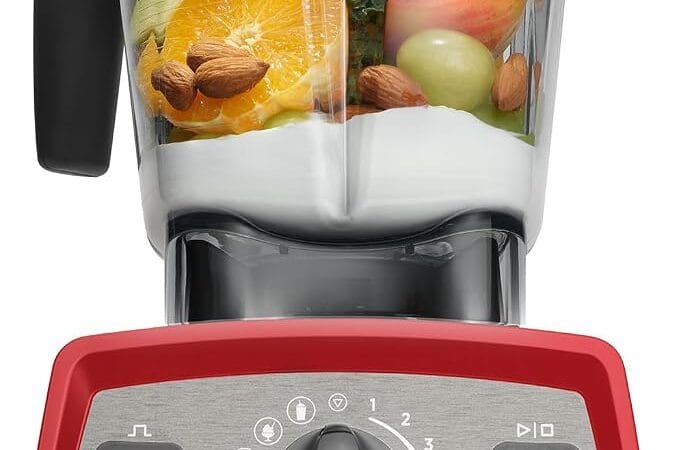
TL;DR: The Vitamix Propel Series 750 is a professional-grade blender built around the same motor and blade geometry Vitamix uses in its commercial machines, scaled down for a home kitchen. Four pre-programmed settings handle smoothies, hot soups, frozen desserts, and self-cleaning without any guesswork, and the 64-ounce container is large enough to actually blend for a family instead of one glass at a time.
Why People Are Switching From a Bargain Blender
A budget blender can crush ice and blend a basic smoothie, but it struggles the moment fibrous greens, frozen fruit, or nuts enter the picture, leaving chunks behind or overheating the motor on longer runs. The Propel 750’s motor is built for sustained, heavy-duty blending rather than short bursts, which is the actual difference between a smoothie with visible spinach flecks and one that comes out completely smooth. Vitamix built its reputation in commercial kitchens and smoothie bars specifically because the motor doesn’t bog down under a full, cold, dense load the way cheaper machines do.
The four program buttons (smoothies, hot soups, frozen desserts, and self-cleaning) remove the guesswork of picking a speed and timing it manually. Hot soups is the one people find most surprising: the blades spin fast enough to heat raw vegetables into a steaming soup through friction alone, with no stove involved.
What’s Actually in the Box
The kit includes the motor base, the 64-ounce low-profile container with a vented lid, and a tamper for pushing thick mixtures into the blades during blending. There’s no separate app, no Bluetooth pairing, and no subscription; the interface is four physical buttons plus a variable-speed dial, which means it works the same on day one as it does five years in.
The self-cleaning program is the detail most new owners mention first: a drop of dish soap, warm water, and about a minute on the self-clean setting handles most of the cleanup, since a Vitamix container isn’t dishwasher-safe on the electronic base but the container itself typically is.
Honest Caveats
This is a countertop blender that stays on the counter; at roughly 17 inches tall with the container attached, it doesn’t tuck easily into a lower cabinet the way a compact blender does. It’s also genuinely loud during the first few seconds of a cold, dense blend, which is normal for a commercial-grade motor and not a defect, but worth knowing before running it early on a weekend morning. And it’s a serious purchase price for a kitchen appliance; the honest case for it is longevity and performance, not being the cheapest way to make a smoothie.
Check Current Price on Amazon →
As an Amazon Associate, efiaifinds.com earns from qualifying purchases. This does not affect the price you pay.
Who It’s Actually For
This fits anyone who blends daily rather than occasionally: a household making smoothies most mornings, someone batch-cooking soups and sauces, or a home cook who’s tired of picking bits of unblended kale out of their glass. It also suits anyone who has already replaced two or three cheaper blenders and is ready to stop buying the same disappointing appliance twice a year.
How It Compares to a Standard Countertop Blender
A typical $40-$80 blender is built around a single high speed and a small, tapered pitcher, which is fine for soft fruit and liquid but struggles with ice, frozen produce, or anything fibrous. The Propel 750’s wider, low-profile container and stronger motor are specifically designed to pull ingredients back down into the blades instead of letting them get stuck spinning at the top, which is the actual mechanical reason it handles tougher blends without needing to stop and stir. For someone who only ever blends a protein shake with milk and a banana, the difference matters less; for anyone blending whole vegetables, ice, or nut butters regularly, it’s the entire reason one blender finishes the job and the other leaves chunks.
A Closer Look at the Hot Soup Program
The hot soup setting works by running the blades at a sustained high speed long enough for friction to raise the temperature of raw ingredients to a near-boil, so a simple mix of tomatoes, stock, and vegetables comes out steaming hot in about six minutes with no pot, stove, or extra cleanup involved. It’s the kind of feature that sounds like a gimmick until it’s actually used on a weeknight when a hot meal is needed fast and the idea of dirtying a saucepan feels like one step too many.
Everyday Ways People Actually Use It
Beyond smoothies, the most common repeat uses are nut butters (almonds or peanuts blended slowly into a smooth spread), homemade nut milk, pancake or waffle batter blended straight in the container, and pureed baby food for parents who want to control exactly what goes into it. The self-cleaning cycle is what actually makes several of these realistic on a weekday: nobody wants to hand-scrub dried batter or nut butter out of a container after a rushed breakfast, and the one-minute clean cycle removes that friction entirely.
Noise and Where It Fits in a Kitchen
Because the motor is genuinely powerful, the loudest moment is the first few seconds when it’s breaking down ice or frozen fruit; once the mixture is moving, the noise drops noticeably. Placing it away from a shared wall or running it a few minutes before anyone else in the house is awake solves the only real friction point most owners mention. It’s a countertop-dweller by design rather than a cabinet appliance, so the honest expectation is a permanent spot near an outlet rather than pulling it out only on smoothie days.
Maintenance That Actually Keeps It Running
Beyond the daily self-clean cycle, an occasional deeper clean (a longer run with warm water and a drop of dish soap, followed by a rinse) keeps odors from starchy or garlicky blends from lingering in the container’s seals. The motor base itself needs nothing beyond wiping down the outside; there are no belts, filters, or replaceable parts to track, which is part of why these machines are known for lasting years of daily use rather than months.
Setting Realistic Expectations Before Day One
This isn’t a blender that turns frozen mango into a milkshake-smooth drink in two seconds; a full, cold load still takes 30-60 seconds of active blending to fully smooth out, and the tamper is there specifically because thick mixtures need to be pushed toward the blades rather than left to sit against the container wall. Once that habit is built, results are consistently smooth; skipping the tamper on a very thick blend is the most common reason a new owner sees a less-than-perfect first result.
Frequently Asked Questions
- How big is the container, and is it enough for a family? The 64-ounce container comfortably makes 3-4 smoothie servings in one blend, which covers most households in a single run.
- Does it really heat soup without a stove? Yes, the hot soup program runs the blades fast enough for friction to bring raw ingredients to a near-boil in about six minutes.
- How hard is it to clean? The self-cleaning program handles most day-to-day cleanup in about a minute with warm water and a drop of dish soap.
- Is it too loud for an apartment? It’s loudest for the first few seconds on a cold or icy blend, which is normal for its motor strength; noise drops once the mixture starts moving.
- Can it crush ice on its own? Yes, ice crushing is well within its normal range and doesn’t require a special setting beyond the standard variable speed or pulse.
- Does it need to stay out on the counter? Realistically yes; at about 17 inches tall with the container attached, most people keep it as a permanent counter appliance rather than storing it after each use.
How We Built This Guide
Our process: this is a research-based pick, not a hands-on lab test. We aggregate verified-owner reviews, professional test data where available, and real discussion patterns from communities like Reddit, then flag every estimate as such in the guide above. We do not accept sponsored placements.
Last checked: September 27, 2026